
How to Optimize for Website ChatGPT, Perplexity & Other Answer Engines
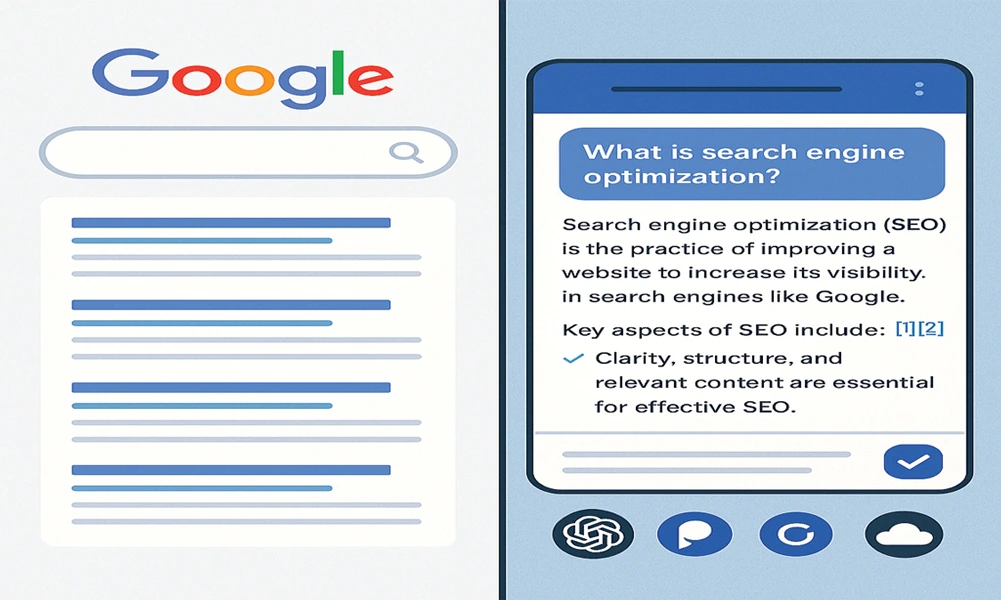
Actionable Tips to Get Your Website Found in AI-Powered Search It’s no longer just about Google. Today’s smart users are asking ChatGPT, Perplexity, and other AI-powered engines to search for search results. If your website isn’t showing up in these new search engine results, you’re missing out on a significant amount of traffic. But here’s the good news: optimizing for AI answers isn’t complicated, if you know what to focus on. Let’s break it down. 👇 What Are “Answer Engines”? Answer engines like ChatGPT, Perplexity, and Claude differ from traditional search engines in several ways. Instead of providing users with 10 blue links, they generate complete answers, often based on a combination of trusted sources, structured content, and citations. That means: • They pull from well-structured, explicit content • They favor authority, clarity, and helpfulness • Your site can be cited and featured, if it’s optimized right ✅ 1. Create Clear, Direct, Helpful Content Think like a machine learning model. • Break complex topics into simple, scannable sections • Use clear headers (H2s and H3s) • Answer specific questions: What is X? How does X work? Why choose X? Example: Instead of saying: “We offer modern web solutions tailored for every business.” Say: “We build websites that load fast, rank well, and convert visitors into customers.” ✅ 2. Use FAQ-Style Questions AI tools love FAQs. They naturally surface in answers and help your content get pulled into ChatGPT’s responses. Do this: • Add a mini FAQ at the bottom of the service pages • Write blog titles that sound like questions • Include answers within 2–3 short sentences Pro tip: Add “How,” “What,” and “Why” questions throughout your content. ✅ 3. Be Specific, Not Generic Perplexity and similar engines reward detailed and local content. Don’t just say you build websites—say you build e-commerce websites for small businesses in Vancouver. The more context you provide, the more likely you are to be cited as a source. ✅ 4. Add Author Names & Business Details Answer engines value transparency and trust. Add: • An author byline or a business owner’s name • Location (city, province) • Business bio or “About” section with expertise This boosts your credibility, especially for YMYL (Your Money, Your Life) topics. ✅ 5. Focus on Clarity Over Keywords While traditional SEO is keyword-heavy, AI engines prefer clarity and helpfulness over keyword stuffing. Use keywords naturally, but make sure your content: • Solves a real problem • Answers a question directly • It is easy to understand at a 9th-grade reading level ✅ 6. Keep Your Content Fresh Outdated info = lower trust. Update your pages at least every 3–6 months. Refresh your stats, add recent projects, and ensure you speak the language of today’s audience. ✅ 7. Add Internal Links and Sources AI engines trace through your site’s content. Add internal links to your: • Service pages • Blog posts • About and contact info Suppose you mention stats or tools, link to the source. This helps establish authority and gets your site mentioned in answers. 💡 Final Thoughts Search is changing fast. But if your content is helpful, clear, and well-structured, not only will Google love it, but ChatGPT and Perplexity will, too. 📞 Want Your Website to Rank on AI-Powered Searches? We build websites that are ready for the future of search. 💬 Let’s talk about optimizing yours today. 📨 Book a free consultation Search Search How to Write Website Copy That Turns Visitors Into Customers The Complete Guide to Choosing the Right Website Platform for Your Business 5 Website Features Every Local Business Needs to Win More Customers How to Get Your Business Found on Google Maps in 30 Days The Beginner’s Guide to SEO for Canadian Businesses How can we help you? Contact us today for more information Contact Us Share on social Facebook LinkedIn X WhatsApp Pinterest Pocket