
How to Maintain Brand Consistency Across Print and Digital Media
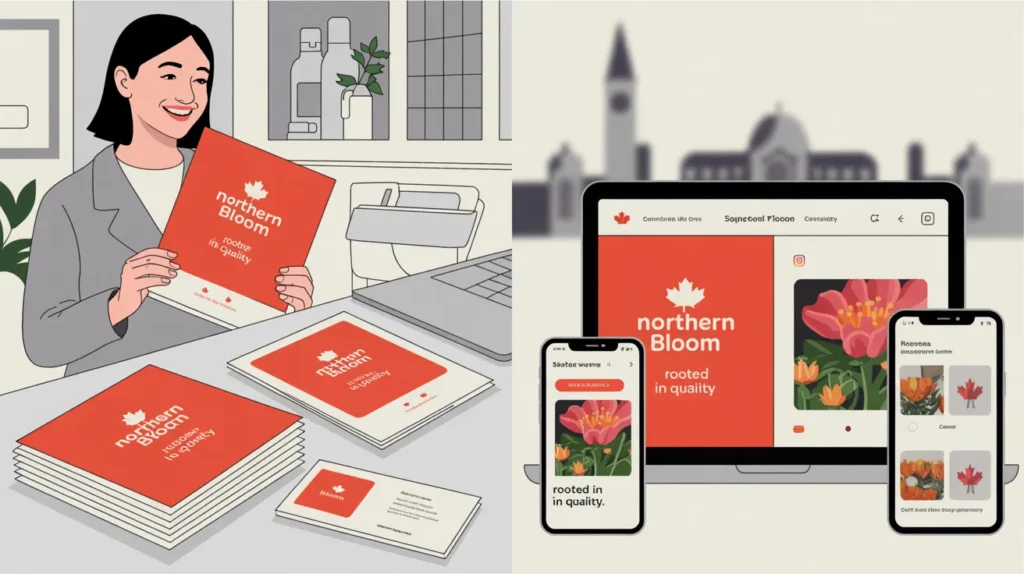
If your brand looks different on your business cards than it does on your website, you’re sending mixed signals to your customers, and mixed signals can cost you sales. In today’s competitive market, small businesses, local service providers, and entrepreneurs in Canada can’t afford to confuse their audience. Whether you’re printing flyers for a local event or launching a new website, your brand’s look, feel, and voice should be instantly recognizable everywhere. At Webby Guy Studio, we’ve seen firsthand how brand inconsistency can weaken trust and hurt conversions. But when your print and digital materials work together, you build credibility, strengthen your message, and attract more loyal customers. Here’s how to make that happen. Why Brand Consistency Matters for Canadian Businesses Brand consistency means making sure every touchpoint, online or offline, looks, feels, and sounds like you. Think about big Canadian brands like Tim Hortons or Canadian Tire. Their colors, fonts, tone, and messaging are consistent across TV ads, Instagram posts, in-store signage, and websites. That consistency builds trust and familiarity, making them memorable. For small businesses, consistency can: Increase brand recognition by up to 80% (Forbes) Improve customer trust and loyalty Boost conversions by presenting a professional, unified image Make marketing campaigns more effective by reinforcing the same message across channels If you want your website, brochures, business cards, and social media profiles to all work toward the same goal, winning more customers, you need a clear strategy. Step 1: Define Your Brand Identity First Before you start designing or redesigning your website, or before you send your logo to a printer, you need to know exactly what your brand stands for. Your brand identity includes: Logo: The cornerstone of your visual branding Color Palette: Choose 3–5 colors that align with your brand personality Typography: Select fonts that are easy to read and match your tone Voice & Tone: Are you professional and formal? Friendly and conversational? Bold and witty? Example: If you’re a landscaping company in Ottawa, you might choose earthy greens, a clean sans-serif font, and a friendly, helpful tone in all your copy. This same style should appear on your website, business cards, truck decals, and Instagram posts. 💡 Pro Tip: At Webby Guy Studio, our website redesign services always start with a brand audit to make sure your digital presence matches your offline identity. Step 2: Use the Same Visual Assets Everywhere Repetition isn’t monotonous; it’s branding. Whether you’re working on a printed brochure or updating your homepage, use the same: Logo version and placement Colors and shades (match exact HEX or CMYK codes) Fonts (and sizes for headings, subheadings, and body text) Photography style (e.g., bright and clean, moody and artistic) Why it matters: If your Facebook ad uses a bright orange background and your flyer uses pale yellow, customers might not realize they’re from the same business. That’s a missed connection, and possibly a missed sale. Step 3: Align Your Messaging Across Platforms Consistency isn’t just visual, it’s also about what you say and how you say it. Ask yourself: Does your website tagline match the one on your business cards? Are your social media captions written in the same tone as your email marketing? Do your Google My Business posts reflect the same offers you promote offline? Example: If you’re offering “Free Winter Tire Storage” on printed flyers for your Toronto auto shop, make sure that offer is also: Highlighted on your homepage Included in your social media posts Featured in your Google Ads campaigns At Webby Guy Studio, we help small businesses create effective SEO strategies that ensure their online and offline promotions are in sync. Step 4: Create a Brand Style Guide A brand style guide is your playbook for maintaining consistency. It should cover: Logo usage rules (including what not to do) Official brand colors and codes (HEX, RGB, CMYK) Approved fonts for print and web Tone of voice guidelines with examples Photography and imagery rules By documenting your standards, you make it easier for everyone, designers, printers, and social media managers, to keep your brand aligned. Pro Tip: If you don’t have a style guide yet, Webby Guy Studio can create one for you as part of our local business website tips package. Step 5: Ensure Web and Print Quality Match One common mistake is focusing too much on either print or digital, but not both. For print: Use high-resolution images (300 DPI) and vector logos to avoid pixelation. For web: Optimize images for fast loading without losing clarity, and ensure colors display correctly on screens. For both: Keep typography legible and branding elements consistent Nothing kills credibility faster than a pixelated logo on your website or blurry text on a flyer. Step 6: Integrate Print and Digital Campaigns Brand consistency works best when your print and digital materials complement each other. Here’s how: Add your website URL and QR code to all printed materials Feature photos of your printed products (like banners or flyers) on social media Use the same promotional graphics in both print ads and Facebook campaigns Example: A Vancouver café runs a “Buy One, Get One Free Latte” promotion. They: Print the offer on table tents in-store Share the same graphic on Instagram Stories Feature it on their homepage banner The result? Customers recognize the offer instantly, no matter where they see it. Step 7: Work with One Design & Development Partner Juggling multiple freelancers for your logo, website, flyers, and ads often leads to inconsistency. By working with a single partner like Webby Guy Studio, you ensure that: Your web design in Canada matches your print marketing Your online and offline branding follow the same style guide Your messaging is consistent across platforms You have one point of contact for updates and campaigns Our website conversion strategies don’t just focus on making your site look good; they ensure your entire brand communicates clearly and effectively, both online and offline. Maintaining Brand Consistency is an Ongoing Process Your business will evolve, with new